
Safety in Laboratories and Containment Levels
In Australia, the Australian/New Zealand Standard Safety in Laboratories, Part 3 – Microbiological safety and containment (AS/NZS 2243.3) is technically a voluntary guideline; however, it becomes mandatory through other regulatory bodies and institutional frameworks:
Office of the Gene Technology Regulator (OGTR): If handling genetically modified organisms (GMOs), you must have your facility certified by the OGTR, who require compliance with AS/NZS 2243.3 for Physical Containment (PC1 to PC4) levels.
Department of Agriculture, Fisheries and Forestry (DAFF): If operating as an Approved Arrangement (AA) site handling quarantine or biosecurity materials, DAFF require compliance with the AS/NZS 2243.3 standard, as well as addition requirements defined by biosecurity containment (BC1 to BC4) levels.
Work Health and Safety (WHS) Legislation: Australian WHS law requires organizations to manage risk. Even without GMOs and biosecurity material, common law and WHS regulators recognize AS/NZS 2243.3 as the "gold standard" for safe microbiological practice. Failing to meet it can leave you liable if an incident occurs.
Microorganism risk groups
AS/NZS 2243.3 classifies microorganisms that are infectious for humans and terrestrial animals for Australia and New Zealand based on the pathogenicity of the agent, the mode of transmission and host range of the agent, the availability of effective preventive measures, and the availability of effective treatments. Microorganisms are classified into four risk groups (RG1-4), defined in Figure 1A, with example microorganisms listed in Figure 1B.
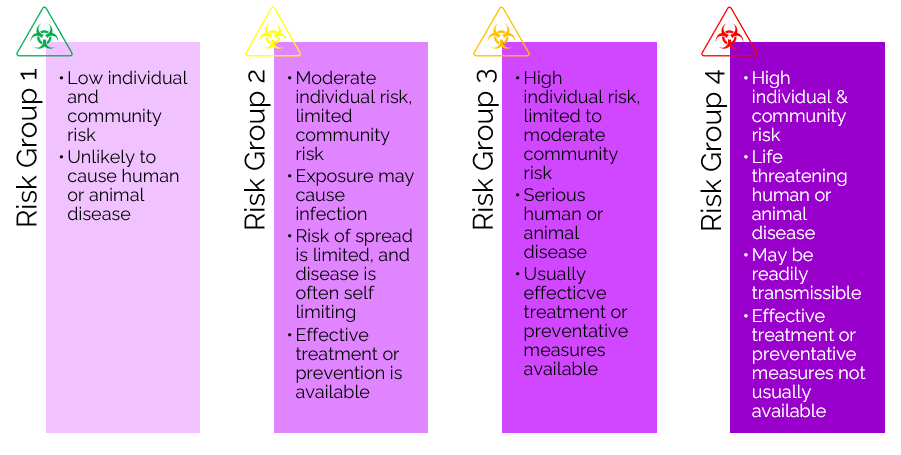
Figure 1A: Definitions of risk groups for microorganisms.
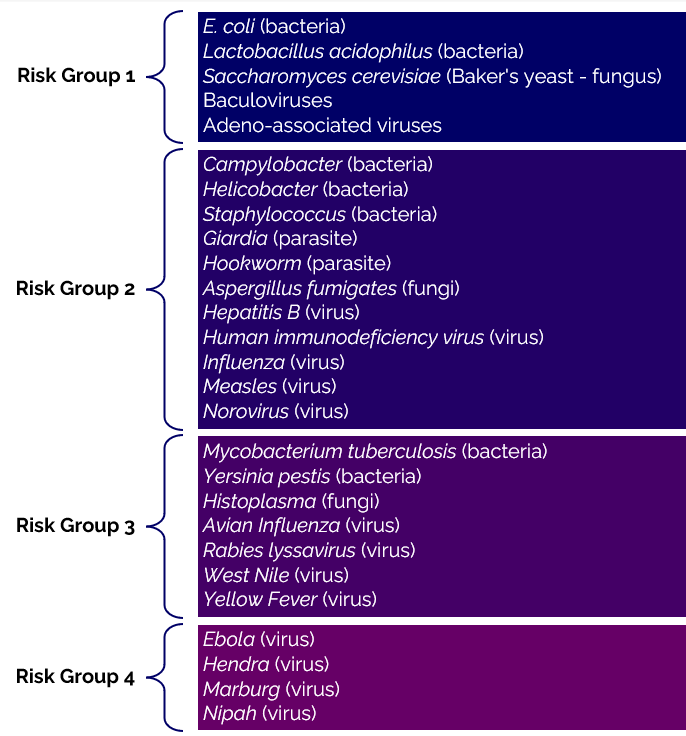
Figure 1B: Examples of microorganisms from RG1-4.
Physical containment (PC) classifications (Australia)
In Australia, the physical containment (PC) level used when working with microorganisms is at minimum the appropriate level for the risk group of the microorganism (e.g. PC level 1 for RG1, PC level 2 for RG2). The PC1-4 laboratory requirements are detailed in AS/NZS 2243.3, which outlines the structural, equipment, and work practices required for each laboratory level.
Approved arrangement sites
An approved arrangement site is where biosecurity activities are undertaken on imported material, covered by an approved arrangement (AA) with The Department of Agriculture, Fisheries and Forestry (DAFF) in accordance with the Biosecurity Act 2015.
AA sites are grouped into several classes, of which research, analysis and/or testing of imported biological material falls under class 5. Laboratory spaces for an AA can be categorized as biosecurity containment (BC) levels 1-4. The BC1-4 levels, while similar to PC1-4, do have some additional requirements above the base PC levels outlined in AS/NZS 2243.3. The additional requirements include further administrative and regulatory mandates, physical boundary definitions, cross-contamination prevention, specific waste treatment guidelines and approved disinfectants.
Biosafety Level (BSL) classifications (USA/International)
Similar to Australian PC1-4 laboratory designations outlined in AS/NZS 2243.3, the US utilise laboratory Biosafety Levels (BSL) 1-4 outlined in the Biosafety in Microbiological and Biomedical Laboratories (BMBL) manual, authored by the Centers for Disease Control and Prevention (CDC) and the National Institutes of Health (NIH). The BSL designations are also adapted by international communities for their own purposes, and it is recognised globally for describing laboratory containment levels.
The BSL designations are roughly comparable to the PC levels in Australia, with some differences in engineering controls and certification requirements specific to Australia. The BSL designations focus broadly on infectious disease control, public health, and research handling of human/animal pathogens, while the Australian PC levels also integrate containment design very tightly with environmental protection and biosecurity. An overview of the Australian PC1-4 and US BSL1-4 laboratory levels is given in Figure 2.
The US classification system in the BMBL manual also ranks pathogens into risk groups, however, it focuses on human health risk, while the Australian definitions outlined above from AS/NZS 2243.3 incorporate agricultural, environmental, and ecological biosecurity into the definitions. Hence, it is worth remembering that a pathogen risk group can change depending on the country or region, due to variance in local endemicity and environmental risk.
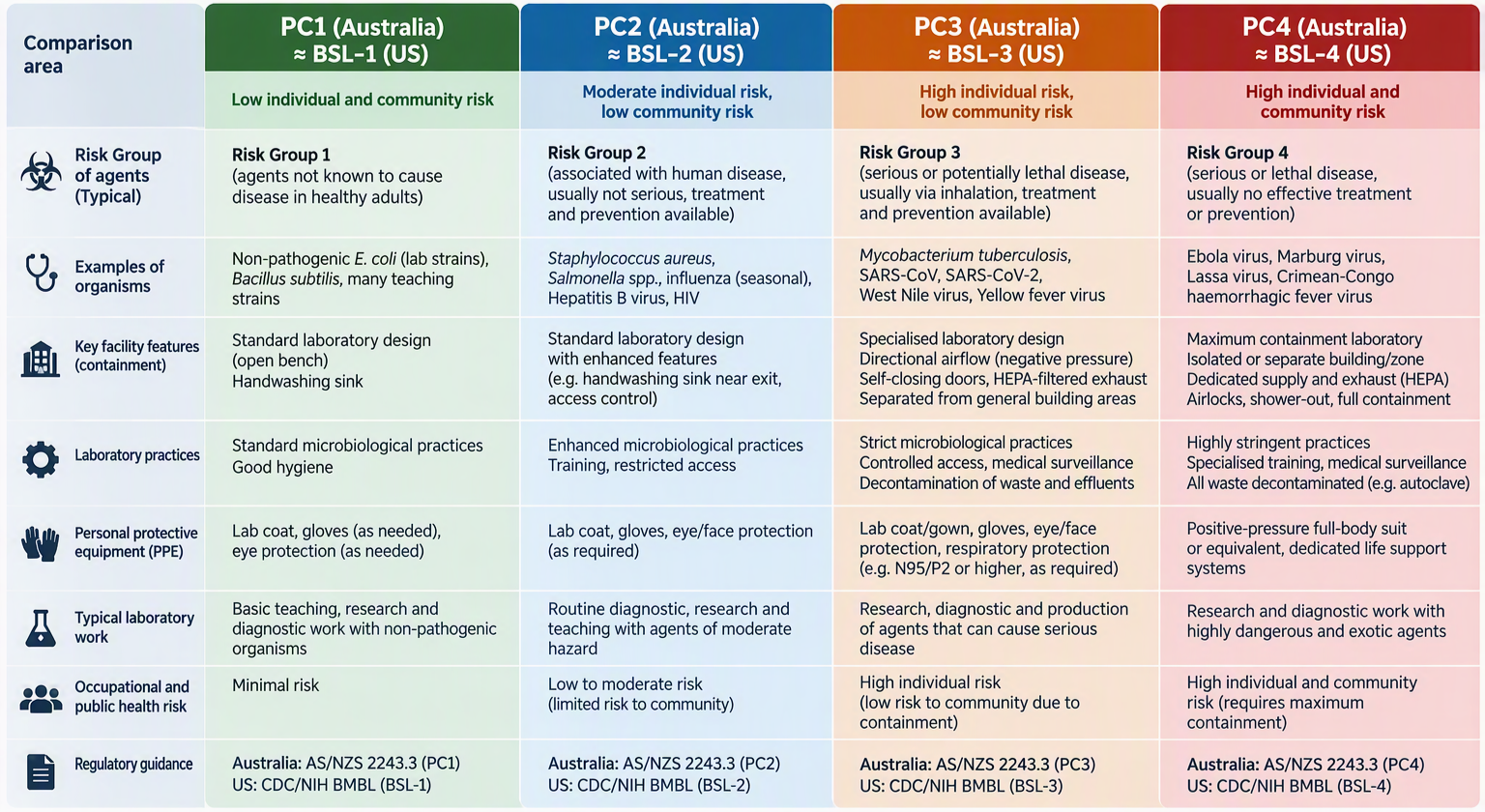
Figure 2: Overview of Australian PC1-4 and US BSL1-4 laboratory classifications – while not exactly the same, they are roughly comparable.
Resources
1. AS/NZS 2243.3:2022 Safety in Laboratories, Part 3 – Microbiological safety and containment.
2. DAFF website for approved arrangements: https://www.agriculture.gov.au/biosecurity-trade/import/arrival/arrangements
3. Biosafety in Microbiological and Biomedical Laboratories, 6th Ed, CDC & NIH.